| EVENTS
Sprints • 100 m Middle distance • 800 m Distance • 5,000 m |
 |
|
Race walk • 20 km |
Hurdles • 100 m, women |
Relays • 4 x 100 m |
Combined • Heptathlon, women |
The track
The 400-meter track is made of two layers of molded vulcanized rubber designed for maximum energy return.

On your marks
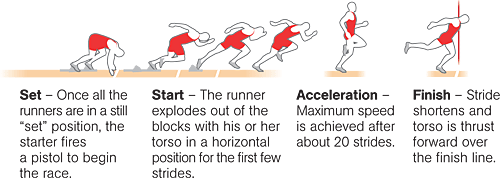
False starts
Only one false start per race is allowed, except in combined events, rather than one false start per athlete per race. Any athlete making the second false start will be disqualified.
Relays
|
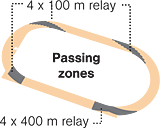
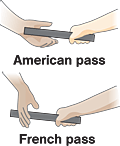
Placement of runners in a relay race is key. The first runner should have a quick start, while the fastest runner takes the final leg. All athletes must run in their own lanes except for the final three legs of the 4 x 400 m. |
 |
 |
Hurdles
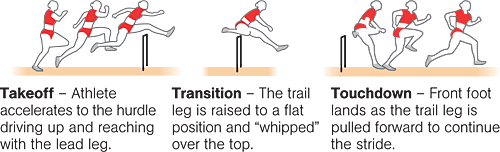
Steeplechase hurdle
with water jump
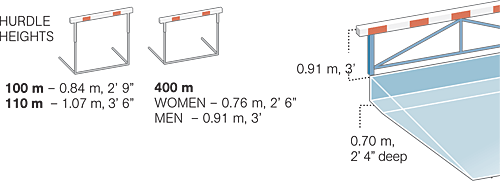
There are 10 hurdles in the 100, 110 and 400 meter events and five hurdles, including a water jump, per lap in the men's 3,000 meter steeplechase.
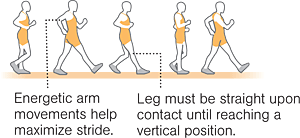
Race walking
|
During competition, athletes must have one foot in contact with the ground at all times. A walker is disqualified after receiving three warnings. |
 |
|||
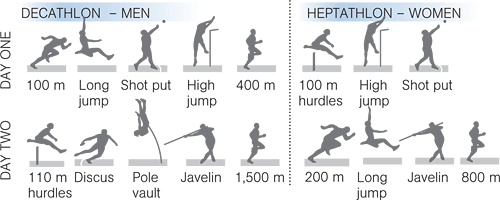
Combined events
Athletes compete in a series of individual events over two days. Points are given for performances in each event. The highest overall point total wins.
Sources: International Olympic Committee; Athens Olympic Committee; "Competitive Swimming Manual for Coaches and Swimmers," James E. Counsilman; "Swimming & Diving," American Red Cross; "Sports: The Complete Visual Reference," Fran'ois Fortin; International Association of Athletics Federations; Summer Games Access; Mondo spa/Mondo USA; USA Volleyball; International Volleyball Federation; "The Complete Book of the Summer Olympics," David Wallenchinsky
Warning: include(/www/specials/olympics2004/footer.html): failed to open stream: No such file or directory in /srv/users/thaarchives/apps/thaarchives/public/specials/olympics2004/events/trackandfield.php on line 132
Warning: include(): Failed opening '/www/specials/olympics2004/footer.html' for inclusion (include_path='.:/opt/sp/php7.4/lib/php') in /srv/users/thaarchives/apps/thaarchives/public/specials/olympics2004/events/trackandfield.php on line 132
Warning: Use of undefined constant php - assumed 'php' (this will throw an Error in a future version of PHP) in /srv/users/thaarchives/apps/thaarchives/public/specials/olympics2004/events/trackandfield.php on line 133